

Social Responsibilities
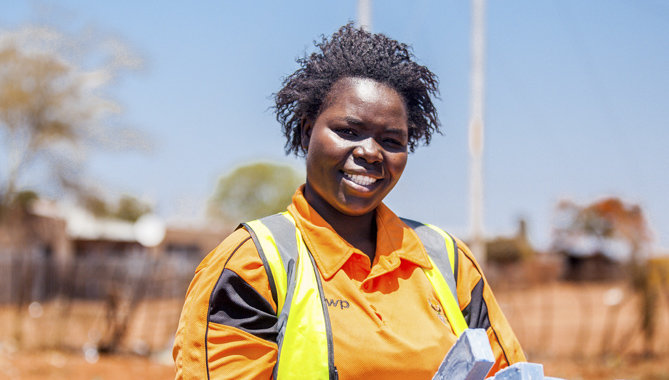
Social Responsibilities: Empowering Communities and Respecting Human Rights
The Best Practice Principles ensure that diamonds from CrownStone Diamonds, on their journey from discovery to consumer, have met the highest professional, ethical and technical standards. Social Responsibilities form one of the four core responsibility areas of the Best Practice Principles — helping prevent unacceptable social practices and ensuring that the people involved in every stage of the diamond pipeline are treated with fairness, dignity and respect.
Social Responsibilities cover employment conditions, health and safety, non-discrimination, the prevention of child and forced labour, and human rights due diligence. Together these commitments ensure that diamond production delivers lasting positive impact for workers, their families and the communities where diamond operations take place.
Each worker shall be treated with fairness, equality, respect and dignity.
Best Practice Principles
EMPLOYMENT
You must show commitment to the pursuance of the provision of the highest standards of employment conditions. The work performed should be based on recognised employment relationships. Obligations to workers should not be avoided by the use of alternative hiring arrangements, such as apprenticeship schemes where there is little or no attempt at imparting skills.
Payment and remuneration details shall be agreed before commencement of employment and documentary evidence to confirm contractual agreements shall be supplied by the employer. Wages and benefits paid for a standard working week shall at least be paid at a minimum national legal standard and these should be adequate to cover basic needs and provide some discretionary income.
There should be no limitations placed on the disposal of income by workers, nor coercion to make use of Company/Entity/Facility stores or services where these exist. When required, recognition should be given to the existence, membership and lawful activities of worker representative bodies, and worker representatives should be given access to carry out their responsibilities. Employers should adopt policies relating to redundancy or layoffs, which should be implemented in accordance with the relevant national laws as applicable.
HEALTH & SAFETY
You must show commitment to the pursuance of the highest standards of health and safety, and the provision of a safe and healthy working environment, which includes minimising the risk of contagious diseases in the workforce, for individuals in accordance with the national minimum requirements of the relevant countries and with due consideration to the international standards set out in International Labour Organisation (ILO) Conventions.
General responsibility for health and safety should be assigned to a management representative and a clear description made available of the formal agreements and communications between employer and worker representatives on issues related to health and safety. Investigation of work-related accidents, fatalities and record keeping of incidents, their causes and subsequent remedial action, should be undertaken to prevent repetition.
Policies and procedures should be established to ensure that workers are not under the influence of, or abusing, drugs, alcohol and/or illegal substances. Where the entity uses and stores Hydrofluoric Acid in its business processes, the entity shall provide effective training to all relevant workers, and maintain records, as well as develop and document robust decontamination procedures.
NON-DISCRIMINATION
Discrimination can mean distinction, exclusion or preference; and, therefore, policies and procedures should be documented clearly to take account of issues relating to the hiring, discharge, pay, promotion and training of workers. No worker should be discriminated against on the basis of race, caste, national origin, religion, age, disability, physical appearance, gender, marital status, sexual orientation, membership of worker representative bodies or political affiliation.
In particular, there should be policies in place to ensure that men and women workers are protected against discrimination based on their marital status. There should be equal opportunities for both men and women across all aspects of training, personal and professional development and career advancement. Workers should have the right to express their grievances or concerns without suffering any prejudice or retribution.
- Fair Employment Conditions
- Health & Safety Standards
- Non-Discrimination
- Prevention of Child Labour
- Prevention of Forced Labour
- Human Rights Due Diligence
- Grievance Mechanisms
PREVENTION OF CHILD LABOUR
The definition of 'child labour' set out in the United Nations International Labour Organisation Minimum Age Convention (138) must be adopted. A child is defined as any person less than 15 years of age unless local minimum age law stipulates a higher age for work or mandatory schooling, in which case the higher age shall apply. Child labour is therefore any work by a child younger than this age and any work that is likely to be hazardous or to interfere with the child's education, or to be harmful to the child's health or physical, mental, moral or social development.
PREVENTION OF FORCED LABOUR
Human trafficking is the movement of an individual across international borders or within a country and can result in forced labour. Companies will be held accountable if they source goods and/or use services provided by exploited workers. Relationships with third party recruitment agencies should be monitored as they expose a group/company/facility to the risk of human trafficking.
The Universal Declaration of Human Rights states 'no-one shall be held in slavery or servitude' and ILO Convention 29 defines forced or compulsory labour as 'all work or service which is exacted from any person under the menace of any penalty and for which said person has not offered himself voluntarily'. The selection and recruitment of workers must be carried out to industry-wide standards and there should be no forced, bonded or involuntary prison labour.
Workers should not be required to lodge deposits or identity papers with their employers and they should be free to leave their employer after reasonable notice. The entity shall provide effective training to relevant employees to identify and address risks of human trafficking in its own business and in its supply chain, and meet all relevant and applicable legislative requirements with respect to human trafficking, such as the Modern Slavery Act 2015 (UK).
HUMAN RIGHTS DUE DILIGENCE
Each worker shall be treated with fairness, equality, respect and dignity. The responsibility of entities is to respect internationally recognised human rights which at a minimum should be considered at those expressed in the International Bill of Human Rights and ILO Declaration on Fundamental Principles and Rights at Work.
Entities should identify and understand their key human rights risks across their geographic areas, business activities and business relationships. They should give equal consideration to civil and political rights (such as the right to freedom of association, the right to life and the right to be free from inhuman and degrading treatment) and economic, social and cultural rights (such as the right to an adequate standard of living, the right to just and favorable conditions of work and the right to safe and healthy working conditions).
No worker should be subject to direct or indirect physical, sexual, racial, religious, psychological, verbal or any other discriminatory form of harassment or abuse, nor subject to intimidation or degrading treatment. Particular attention should be given to individuals or groups of individuals who are at heightened risk of becoming vulnerable or marginalised.
The entity should have a policy in place to verify as to whether they are sourcing diamonds (or gold or platinum) directly or indirectly from Conflict-Affected or High-Risk Areas. If the entity is sourcing from a Conflict-Affected or High-Risk Area, a human rights diligence process shall be undertaken to assess the heightened risks of human rights impacts, following the OECD Due Diligence Guidance for Responsible Supply Chains of Minerals from Conflict-Affected or High-Risk Areas.
In instances where entities have identified that they have caused or contributed to adverse human rights impacts through direct sourcing practices, the Entity must provide for or cooperate in legitimate processes to enable the remediation of these impacts. Identified risks should be addressed through implementing systems to manage and mitigate risks of causing or contributing to conflict and adverse human rights impacts.
Conclusions
Social Responsibilities within the Best Practice Principles ensure that diamonds from CrownStone Diamonds, on their journey from discovery to consumer, have met the highest professional, ethical and technical standards. By upholding fair employment conditions, maintaining the highest health and safety standards, preventing discrimination, eliminating child and forced labour, and conducting thorough human rights due diligence, CrownStone Diamonds upholds the highest standards of social responsibility across the diamond industry.